
About
Gusii Innovation Week

Background
Scaling Innovations for Climate-Smart Food Systems
Gusii Innovation Week 2026 (GIW2026) is a regional flagship event to accelerate climate-smart agrifood innovation in Southwestern Kenya. Building on the inaugural GIW2025; which convened over 300 participants and produced 16 tech prototypes addressing agrifood challenges; the 2026 edition will scale up these successes. GIW2026 advances this journey with a focused theme of “Scaling Innovations for Climate-Smart Food Systems,” aiming to turn proven ideas into widespread action.
Objectives
Goals of GIW 2026
GIW2026 is designed to achieve the following goals:
Read More
Inspire development and scaling of technologies and practices for climate-resilient, regenerative agriculture and food systems.
Read More
Engage young innovators and women agripreneurs at the forefront of solution design and entrepreneurship, building on GIW2025’s momentum in youth and female participation.
Read More
Connect startups, MSMEs and cooperatives to mentorship, markets, and investment to boost value addition, market access, and agro-industrialization.
Read More
Strengthen multi-stakeholder networks (public, private, academia, civil society, diaspora) to drive collective action in food systems innovation beyond the event.
Read More
Align innovation efforts with policy frameworks and attract funding (public and private) into climate-smart agrifood initiatives, supporting Kenya’s development agendas (Vision 2030, BETA) and global goals.
GIW 2026
Thematic Tracks
Climate-Smart & Regenerative Agriculture
Emphasizing sustainable farming practices that enhance resilience to climate change while restoring soil and ecosystem health.
AgriTech, AI & Digital Agriculture
Focusing on the transformative power of technology – from artificial intelligence and IoT to mobile apps and big data – in agriculture.
Value Addition, Agro-Processing & Manufacturing
Dedicated to strategies for moving up the value chain – processing raw agricultural outputs into diversified, higher-value products.
Market Access, Trade & AfCFTA Opportunities
Concentrating on connecting producers to markets; locally, regionally, and internationally.
Green Finance, Climate Finance & Impact Investment
Addressing the crucial question of financing innovation and climate-smart agriculture. Lack of affordable financing remains a systemic barrier for farmers and agripreneurs.
Diaspora
Additionally, a segment will be devoted to the role of diaspora investment and remittances in agribusiness; a theme identified in 2025 for further development.
-
Lessons from GIW2025
The Power of Partnership
GIW2025 demonstrated the value of collaboration across government, academia, industry, and community. The event brought these actors “under one roof,” creating a robust support system for innovators
-
Lessons from GIW2025
Youth and Women at the Center
The inaugural event showed that given the opportunity, youth and women innovators deliver high-impact solutions. Many hackathon teams and summit panelists were youth or female-led, prompting calls by policymakers to further empower these group
-
Lessons from GIW2025
Local Problems, Homegrown Solutions
Innovations were most successful when tailored to local needs.
-
Lessons from GIW2025
From Ideas to Impact – Follow-through is Vital
A major lesson was that prototypes and pitches must translate into real-world impact.
-
Lessons from GIW2025
Greater Visibility and Policy Influence
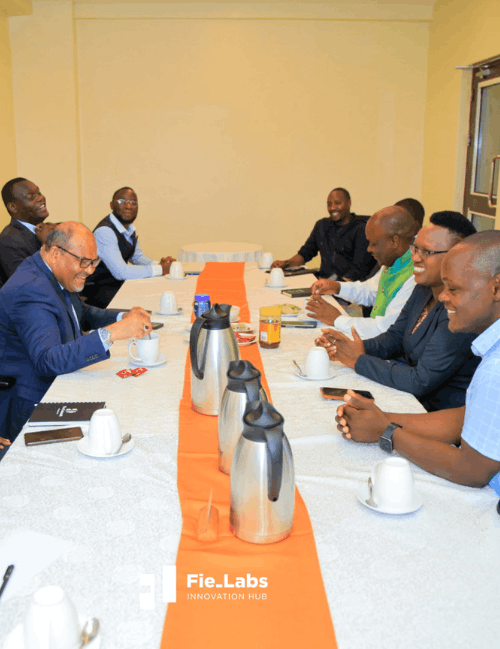
GIW2025 garnered significant media attention and government buy-in.



-
GIW2025 demonstrated the value of collaboration across government, academia, industry, and community. The event brought these actors “under one roof,” creating a robust support system for innovators
-
The inaugural event showed that given the opportunity, youth and women innovators deliver high-impact solutions. Many hackathon teams and summit panelists were youth or female-led, prompting calls by policymakers to further empower these group
-
Innovations were most successful when tailored to local needs.
-
A major lesson was that prototypes and pitches must translate into real-world impact.
-
GIW2025 garnered significant media attention and government buy-in.
Results
Expected Outcomes & Impact Targets
20+ prototypes developed during hackathon, addressing track-specific challenges; Top 10 to receive incubation support post-event
30+ startups/MSMEs to pitch to investors and partners during the summit and deal rooms (at least 6 per thematic track), spurring funding discussions.
10+ formal deals/MoUs signed or firmly committed by end of event (e.g. investment deals, partnership agreements, pilot project MoUs).
15+ new strategic partnerships forged, such as:
Innovation working groups for each of the 5 tracks (industry, academia, government members)
At least one diaspora partnership (e.g. diaspora fund or mentorship program launched)
New sponsor or institutional partners committing to support GIW beyond 2026.
800+ in-person participants over the week (more than doubling 2025), including international delegates.
1,500+ public visitors to open events (e.g. Food & Innovation Fair).
Virtual reach: Live-stream audience of 1,000+, enabling diaspora and remote participation.
1,000,000+ media impressions (print, broadcast, online) with coverage in national media and trending on social media (#GIW2026).
Publish 2+ policy briefs (climate-smart agribusiness, youth innovation) for government and stakeholders.
Secure on-site presence of media houses and produce a professional documentary of GIW2026.
Launch at least 2 new programs as a result of GIW2026:
- e.g. a Climate-Smart Agriculture Challenge Fund (with donors/banks) seeded to finance pilots
- an expanded GIW Accelerator Program to support 2026 innovators for 6-12 months.
Target 50%+ of prototypes from GIW2026 to progress into pilots or incubated ventures within one year.